Block Buster - No Timer
Lion Studios PlusPuzzle
4.5340.00 Reviews
- Version
- 1.8.0
- Installs
- 500.00K
- Age Rating
- Everyone
Screenshots
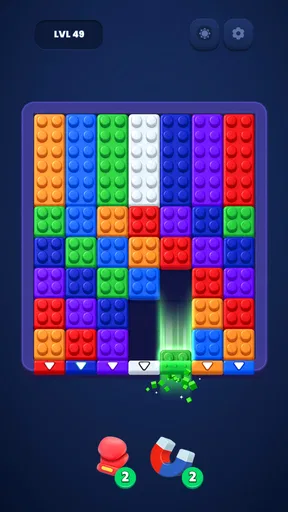
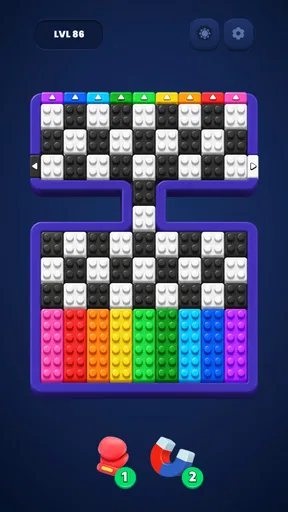
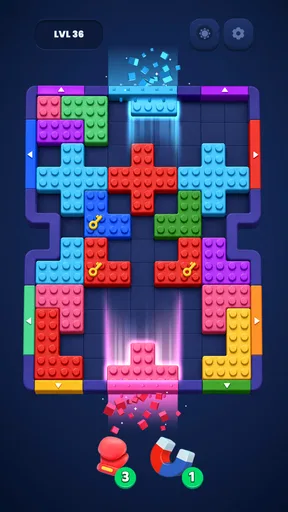
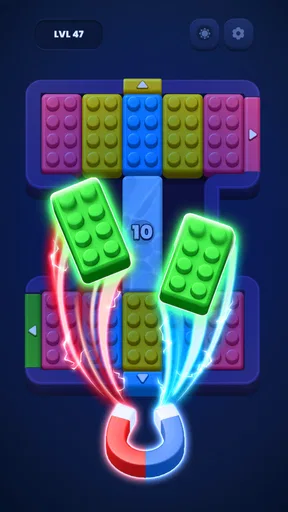
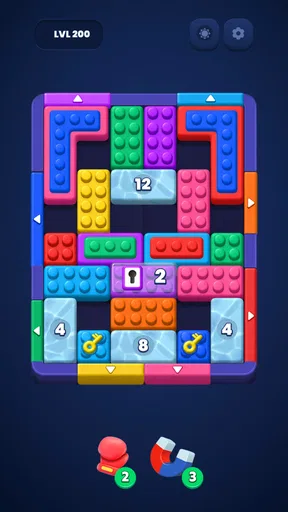
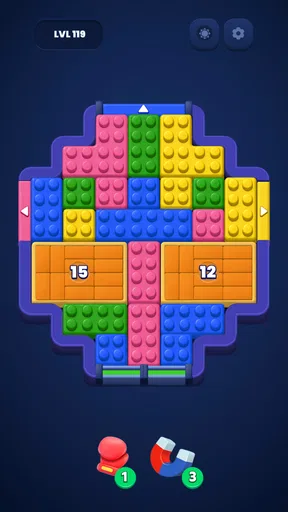
Our Review of Block Buster - No Timer
 Analysis by Appyee
Block Buster - No Timer is the kind of puzzle game I can open with no preparation, play for a few minutes, and put down without feeling that I have abandoned a complicated task. Its appeal is immediate: colorful blocks, simple moves, and the quiet satisfaction of clearing space. As a free puzzle game from Lion Studios Plus, it aims at people who want a light brain workout rather than a long story, a demanding competitive ladder, or a game that requires constant attention.
After spending time with it, I found the clearest part of its identity in the name. The no-timer approach makes each board feel like a small problem to examine instead of a race against the clock. That changes the mood considerably. I can think through a placement, notice a better possibility, and restart my plan mentally before committing. It is relaxing, although the simplicity also means that long-term excitement depends heavily on how much pleasure I get from repeating the same basic puzzle rhythm.
Why the no-timer format works so well
The first few moments are easy to understand. I am looking at a block arrangement, considering where pieces fit, and trying to clear lines or groups in a way that keeps the board usable. There is no need to learn a character, follow a plot, or remember a complicated control scheme. That makes it a particularly comfortable choice when I have only one hand free or when I want something I can understand immediately after a busy day.
The absence of a countdown is more than a small convenience. In many block puzzle games, the timer becomes the main source of pressure, and the player ends up reacting quickly rather than solving carefully. Here, I can inspect the board before moving. I pay more attention to the spaces I am creating, not just the blocks I am removing. That gives the game a more thoughtful feel, even though the underlying actions remain straightforward.
I also like that the game does not demand a large time commitment before it becomes enjoyable. A short visit can still contain a complete little decision-making cycle: place a piece, open a gap, prepare for the next move, and decide whether to protect a useful area or take an immediate clear. That makes it suitable for a queue, a coffee break, or a few quiet minutes before sleep.
There is a useful distinction between “easy to start” and “easy to play well.” The controls and objective are accessible, but preserving room on the board requires some discipline. A move that looks helpful can leave awkward corners or reduce the number of future options. I found that the game becomes more satisfying when I stop treating every possible clear as automatically good and start thinking about the shape of the remaining space.
A practical way to approach each board
My most reliable habit is to look at the empty areas before looking for the fastest clear. If a move removes blocks but divides the board into unusable pockets, it may be less valuable than a quieter placement that keeps a broad open area. This is one of the game’s better small lessons: the visible reward is not always the best strategic choice.
I also try to avoid filling the center too early. Keeping a flexible middle area gives later pieces more possible homes, while edges and corners can be useful for shapes that would otherwise be difficult to place. This is not a complicated system, but it creates enough room for personal improvement. A new player can simply place what fits; a more careful player can begin planning for the next few turns without needing a timer to create tension.
Another useful approach is to treat a nearly complete line as a resource rather than an obligation. Sometimes I leave it open while placing another piece elsewhere, because completing it immediately would create a poor board shape. That kind of delayed decision is where the no-timer design earns its place. I can choose based on the whole board instead of being pushed toward the first available action.
These habits also reveal a limitation. Players who prefer fast reactions, dramatic surprises, or a strong sense of escalating challenge may find the calm pace too gentle. The game’s pleasure comes from arranging space and making clean decisions, not from delivering constant spectacle. If your favorite puzzle games depend on urgency, changing objectives, or intense score chasing, this may feel underpowered by comparison.
Short sessions, interruptions, and returning later
The strongest everyday use case is probably the interrupted session. I can imagine opening it while waiting for an appointment, getting called away after a couple of moves, and returning without having to reconstruct a story or remember a chain of instructions. That low mental overhead is valuable. The game does not ask me to be fully available for a long stretch, so it fits naturally into small gaps in the day.
That flexibility also makes it different from timed block puzzlers. A timer can create excitement, but it makes interruptions costly. If a message arrives or I need to put the phone down, the pressure continues in the background of the experience, even when the game is designed to pause. In a no-timer format, the main challenge remains on the board rather than in the clock. I can step away with less frustration and return to the same visual problem at my own pace.
For this reason, I think it is a better match for casual players who dislike being punished for slow thinking. It is also friendlier to people who play in environments where attention is regularly divided. I would still avoid opening any game while driving or handling something that needs concentration, but for ordinary waiting-room or break-time use, the format is unusually forgiving.
The trade-off is that interruption tolerance can reduce urgency. When I return after a break, I am not pulled back by a dramatic cliffhanger or a rapidly changing challenge. I simply continue the board. That is ideal when I want a peaceful activity, but less effective when I need the game to motivate me to come back. The experience depends on whether the act of solving itself is enough of a reward.
Who will enjoy the calm rhythm
I would recommend it to someone who wants a puzzle they can understand in seconds and revisit without ceremony. It works well for players who enjoy visual organization, careful placement, and modest strategic planning. It is also a sensible choice for a family member who finds action games stressful but still wants something interactive and mentally engaging. The Everyone age rating supports that broad, accessible positioning.
I am less convinced it is the right choice for someone seeking a deep puzzle system with layers of rules. Traditional logic games, number puzzles, or highly structured daily challenges may provide a stronger sense of progression for that audience. Likewise, players who measure enjoyment through competition, leaderboards, or speed records may prefer a game built around those goals rather than one that deliberately removes the timer.
One thing I appreciate is that the game does not require me to reserve a particular emotional state. I do not need to be energetic to enjoy it, and I do not need to concentrate intensely to get started. On a tired evening, I can make a few placements and still feel that I have used my attention in a pleasant way. On a more focused day, I can examine the board more carefully and look for cleaner solutions.
How it compares with familiar alternatives
Compared with classic falling-block games, this experience feels less frantic because the pieces are not forcing immediate decisions through gravity or a countdown. That makes it easier to plan, but it also removes much of the excitement created by rapid stacking and last-second recovery. If you enjoy the physical rush of rotating and dropping pieces under pressure, this game may seem too restrained.
Compared with match-style puzzle games, it is more about managing open space than spotting quick combinations. Match games often reward scanning for a special arrangement and enjoying a chain reaction. Here, the satisfaction is quieter: I place something carefully, preserve room, and eventually create a clean board. Players who prefer bright cascades and frequent effects may want the more animated alternative.
Compared with daily logic apps, it is more flexible but usually less structured. There is no need to wait for a particular daily problem or follow a fixed routine. I can play whenever I want, which is convenient, but the absence of a scheduled challenge may make it easier to drift away. In my experience, this is best viewed as a pocket-sized pastime rather than a formal training program.
That comparison helped me understand its strongest niche. It is not trying to replace every kind of puzzle. It is for the moment when I want a colorful board, a few meaningful choices, and no pressure to perform quickly. The best reason to choose it is control over the pace, not an unusually complex rule set.
What keeps the replay loop interesting
Replay value comes from trying to handle the board more intelligently, not from a story that unfolds or a collection of characters that changes over time. I can return because I want to make better placements, last longer, or avoid the mistakes that crowded my previous board. That is a legitimate loop, but it is naturally repetitive. The game needs the basic act of arranging blocks to remain satisfying because that is where most of the experience lives.
For me, replaying works best when I set a small personal goal. Instead of playing without direction, I might focus on keeping the central area open, avoiding isolated gaps, or delaying a tempting clear until the rest of the board is safer. These goals make familiar actions feel more deliberate. They also turn failure into useful feedback: I can identify whether I filled a corner too early or chose short-term space over long-term flexibility.
A less obvious benefit is that the no-timer structure makes experimentation affordable. I can test a move that is not immediately obvious, observe how it changes the available space, and learn from the result without feeling rushed. That is valuable for beginners because the game teaches through consequences rather than demanding perfect reactions from the start.
However, I would not describe the replay value as limitless. If I need new mechanics, a campaign, or a strong progression track to stay interested, the straightforward block format may lose its pull. The game is better at offering dependable small sessions than at creating a large journey. That distinction matters before downloading it: it is a reliable snack, not necessarily a full meal for a dedicated puzzle enthusiast.
Small choices that improve the experience
I recommend playing with a “space first” mindset. Before placing a piece, I look for the move that leaves the greatest number of future placements available. This often means accepting a less impressive immediate result. It is especially helpful when the board begins to narrow and every awkward gap becomes expensive.
I also avoid making one side of the board too dense unless I have a clear reason. Uneven growth can produce a tempting open area on one side while leaving the other side unusable. Keeping the arrangement reasonably balanced gives me more ways to respond when an inconvenient shape appears.
Finally, I use short sessions intentionally. Rather than expecting every visit to become a long run, I stop when the board stops feeling enjoyable. Because there is no countdown pushing me onward, the game works well as a self-contained break. This prevents the repetitive loop from becoming a chore and preserves the simple pleasure of returning later.
The free entry point is another practical advantage. I can try the core experience without paying first, which is exactly what I want from a small casual puzzle. The game includes in-app purchases ranging from $1.99 to $199.99 per item, so I would advise checking the purchase prompts carefully and deciding in advance whether optional spending fits the way I plan to play. A free download is not the same thing as a completely cost-free experience once optional purchases are involved.
Device compatibility is also fairly approachable: the game supports Android 6.0 and later. Its current version is 1.8.0, and the game has already passed half a million installs. Those details suggest that it is easy to find and try on a broad range of Android devices, though the actual feel will still depend on the phone’s screen size and responsiveness.
My casual verdict after living with the format
Block Buster - No Timer succeeds because it understands a simple need: sometimes I want a puzzle that starts immediately, respects interruptions, and lets me think without a clock pressing against every decision. The colorful presentation makes the board inviting, while the block-placement loop gives each move a small consequence. It is approachable enough for a first session but offers a little more thought once I begin protecting space and planning ahead.
Its weaknesses are closely tied to those strengths. The relaxed pace can feel too quiet for players who need urgency, and the basic format may not provide enough variety for anyone looking for a long-term puzzle obsession. Repetition is part of the package. I would also keep the in-app purchase range in mind before handing the phone to a child, even though the content rating is Everyone.
In my view, this is a good download for short, interrupted sessions: waiting for a bus, taking a mental break between tasks, or winding down without committing to a full game. It is not the option I would choose for competitive speed play, elaborate progression, or constantly changing objectives. For those needs, a timed block game or a more structured logic title will probably be stronger.
But when I want a calm board and the freedom to pause whenever real life interrupts, this game makes a convincing case for itself. Its average rating of 4.5 from around 21 thousand ratings reflects a broad level of player approval, and I can understand why. It delivers a clean, low-pressure puzzle routine that is easy to recommend to casual players, provided they are comfortable with a deliberately repetitive format and optional purchases.
Verdict
Strengths of Block Buster - No Timer
- Simple block-puzzle rules make it easy to learn without a tutorial.
- Relaxing gameplay suits short breaks and casual sessions.
- No timer allows thoughtful moves instead of rushed decisions.
- Offline play is convenient when no internet connection is available.
- Colorful visuals and clear controls work well on mobile screens.
Limitations of Block Buster - No Timer
- Limited gameplay variety may become repetitive over longer sessions.
- Difficulty can increase sharply after a few successful rounds.
- Some players may miss competitive modes or online leaderboards.
- Undo options or other helpful features may be restricted.
- Ads can interrupt play, depending on the version and device.
Other Releases by Lion Studios Plus
View All
Match 3D -Matching Puzzle Game
Puzzle4.5

Hexa Sort
Puzzle4.5

Wordle!
Word4.5

Point Out: Color Escape Puzzle
Puzzle4.6
Similar Picks in This Category
View All
Block Blast!
HungryStudio4.8

Braindom: Brain Games Test
Lahana Game Studio4.6

AMAZE!
CrazyLabs LTD4.6

Sudoku - Classic Sudoku Puzzle
Oakever Games4.7

Art Puzzle - Puzzle Games
Easybrain4.8

Amaze GO!
Oakever Games4.9
Frequently Asked Questions
What is Block Buster - No Timer?
Block Buster - No Timer is a relaxing block puzzle game focused on arranging and clearing pieces from a board. Unlike many fast-paced puzzle titles, it does not pressure you with countdowns or forced moves. You can study the available shapes, plan combinations, and play at your own pace, making it suitable for short sessions as well as longer, more thoughtful gameplay.
How do you play Block Buster - No Timer?
The main objective is to place the available block shapes onto the playing board and complete full rows or columns to clear them. Each move requires some planning because pieces generally cannot be rotated freely once selected, and available space can quickly become limited. Clearing lines creates room for new blocks, while running out of valid spaces ends the round.
Does Block Buster - No Timer really have no time limit?
Yes, the game is designed around timer-free play. You are not required to complete a move before a countdown expires, so you can take time to examine the board and consider different placements. This makes the experience less stressful than traditional timed puzzle games, although the challenge still increases through limited space and the need to avoid blocking future moves.
Can I play Block Buster - No Timer offline?
Block Buster - No Timer is generally suited to offline play because its core puzzle mechanics do not depend on real-time multiplayer or a constant internet connection. You should still connect occasionally if the app includes advertisements, optional online features, updates, or store-related services. Availability of specific functions may vary depending on the version installed and your device.
Is Block Buster - No Timer free to download and suitable for all ages?
The game can typically be downloaded for free, but the exact business model may include advertising or optional in-app purchases, depending on the platform and current release. Its simple controls and non-violent puzzle format make it accessible to a broad range of players. Before downloading, check the store listing for age guidance, permissions, advertisements, and purchase information.
Play our best games!


